7 Best Ways to Remove Rust from an Old Steel Door?

Time:2026-10-16 Author:Isabella
0%

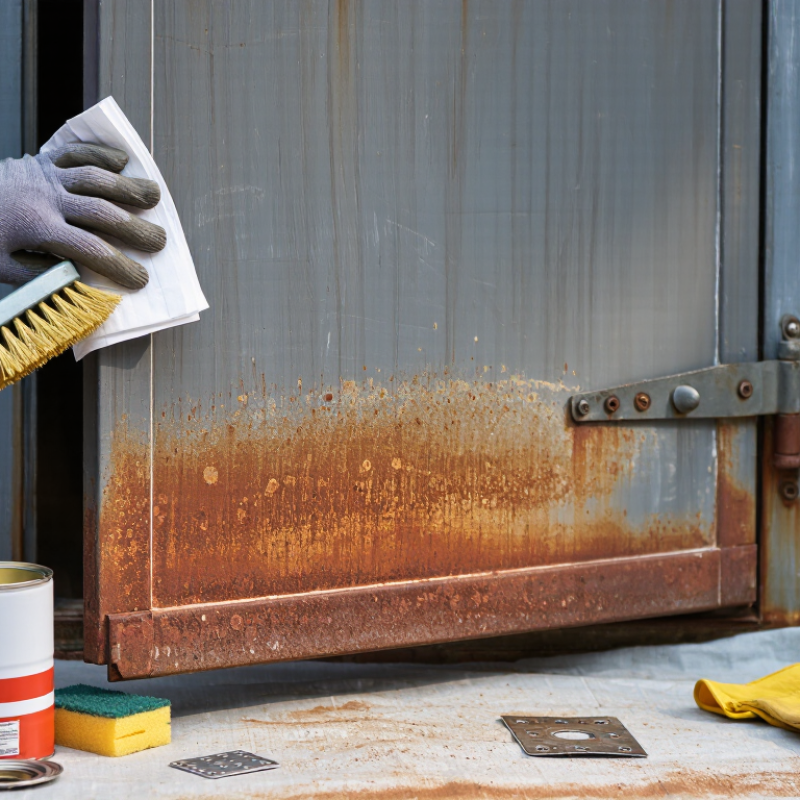
How to remove rust from an old steel door is not a one-step repair. Rust may appear as orange dust, rough blisters, or deep pits around the bottom edge. Each condition demands a different response. Surface rust can often be cleaned with a wire brush and abrasive paper. Heavy corrosion may require a rust converter, patching, or professional assessment. The door’s hinges, frame, weather seal, and nearby masonry also deserve attention.

Scott Sidler, a historic-preservation contractor and author, often stresses the importance of preparation. His practical warning is clear: “Paint cannot rescue metal that was never properly prepared.” That principle guides the seven methods in this article. The goal is not merely to make the door look new. It is to remove loose corrosion, protect exposed steel, and prevent moisture from returning beneath the finish.

A careful repair begins with gloves, eye protection, ventilation, and a close inspection. Test a small hidden area before using chemical products. Some cleaners work quickly but may damage surrounding paint or stone. I have found that rushing the sanding stage creates visible scratches and early peeling. That mistake is easy to repeat. Allow the surface to dry completely before applying primer. Then choose a compatible metal primer and exterior-grade topcoat. Results depend on patience, product compatibility, and honest judgment about the remaining damage.
7 Best Ways to Remove Rust from an Old Steel Door?

Classify Door Rust with ISO 8501-1 Grades A–D Before Treatment

Before choosing a rust-removal method, inspect the door under strong daylight. ISO 8501-1 grades help define its starting condition. Grade A shows intact mill scale with little rust. Grade B has rust forming beneath flaking mill scale. Grade C has lost mill scale and shows limited pitting. Grade D has widespread pitting and a rough, heavily corroded surface. These grades guide treatment, but they do not measure remaining steel thickness. Tap suspicious areas gently.

For light Grade A or B rust, scrape loose scale with a hand scraper. Follow with a stiff wire brush. Sanding blocks can smooth small patches around hinges and edges. An electric wire wheel removes stubborn rust faster, but it can leave grooves. Abrasive blasting cleans broad surfaces effectively when dust control is available. Chemical rust removers reach narrow seams, although dwell time and rinsing require care. Rust converters can stabilize thin residue, but they cannot rebuild missing metal. Seven methods, different limits.

My practical sequence is simple: scrape, brush, sand, and inspect again before using stronger equipment. Wear eye protection, gloves, and suitable respiratory protection. Keep moisture away from the bottom rail, where rust often returns first. On Grade C surfaces, measure deep pits and check door stiffness before coating. Grade D may need metal repair rather than another aggressive cleaning pass. I once overused a wire wheel near a hinge and removed sound steel; that mistake made the repair harder. A clean-looking surface is not always a sound one.

Remove Loose Rust by Scraping, Wire Brushing, and Needle Scaling

7 Best Ways to Remove Rust from an Old Steel Door?

Loose rust should be removed before sanding or painting. It hides weak steel and can trap moisture under new coatings. The NACE IMPACT study estimated global corrosion costs at about $2.5 trillion annually, equal to 3.4% of global GDP. Small repairs can prevent larger metal losses.

Start with a scraper and remove curling flakes around hinges, edges, and the lower rail. Use a stiff wire brush next. Brush in several directions until bright steel and firmly attached rust become visible. For thick scale, needle scaling can break the hard crust without removing excessive sound metal. Wear eye protection, gloves, hearing protection, and a suitable respirator. I once stopped brushing too early; the surface looked clean, but hidden rust returned within weeks.

Tips: Place a drop cloth beneath the door. Collect rust debris instead of blowing it into the air. Compare the prepared surface with ISO 8501-1 visual grades when possible. This standard helps describe remaining rust and mill scale consistently. Do not force needles into thin steel. They can create pits or enlarge existing holes. Check the door’s thickness near the bottom edge with careful probing, then repair weak sections before coating. A clean-looking surface is not always a sound one.

Smooth Remaining Corrosion with Sanding and Angle Grinding

Removing rust from an old steel door requires more than aggressive scraping. The NACE IMPACT study estimated global corrosion costs at about $2.5 trillion annually, or 3.4% of global economic output. Careful preparation helps prevent that waste.

Wear safety glasses, hearing protection, gloves, and a properly fitted respirator. Secure the door before sanding. Start with coarse abrasive paper, around 60 to 80 grit, and follow the grain of the steel. Keep the pad moving. Staying in one spot can create low areas and visible heat marks.

A sanding block gives better control on broad, flat sections. Corners need lighter pressure.

For thick scale, an angle grinder can save time, but it removes sound metal quickly. Use a guarded wheel suitable for steel, and hold the tool with both hands. Keep sparks away from dry debris, coatings, and nearby people.

The U.S. Occupational Safety and Health Administration requires guarding and safe operating practices for abrasive wheels, reflecting the hazards of high-speed grinding.

Work in short passes, then inspect the surface under bright side lighting. Stop when the orange corrosion disappears, not when the panel becomes thinner. I sometimes over-sand edges; that mistake is easy to make.

Finish with 120 to 180 grit until the door feels uniformly smooth, then remove dust before applying a compatible rust-inhibiting primer.

Dissolve Rust Using Citric Acid or Phosphoric Acid at Label Strengths

Rust on an old steel door is not merely cosmetic. The NACE IMPACT study estimated global corrosion costs at about $2.5 trillion annually, equal to 3.4% of global GDP. Acid treatment can prevent small rust patches from becoming expensive repairs.

Citric acid works gently on light or moderate rust. Mix it only at the concentration stated on the product label. Apply it with a plastic brush, then watch the surface closely. A dull orange film should soften, not bubble violently. Phosphoric acid reacts differently. It dissolves rust and can leave a dark phosphate layer that supports later coating adhesion. Use the label strength, never guess from internet recipes. Start with a hidden 5-centimeter test area.

Protect your eyes, gloves, skin, and nearby flooring. Keep the door ventilated, and never mix acids or cleaners. Remove loose scale with a wire brush before application. Work in small sections, rinse according to the label, and dry the steel immediately with clean towels. Moisture left around hinges can restart corrosion overnight. I have found that corners often need a second light treatment, but aggressive scrubbing can expose fresh steel. That trade-off is easy to miss. After drying, inspect for remaining pits, then apply a compatible corrosion-resistant primer. Product Safety Data Sheets and ISO 12944 coating guidance support checking surface cleanliness and coating compatibility before painting.

Abrasive-Blast to SSPC-SP 6 and Measure a 1.5–3 mil Surface Profile

Removing rust from an old steel door takes more than choosing the strongest method. Scraping, wire brushing, sanding, needle scaling, power-tool cleaning, chemical treatment, and abrasive blasting are seven workable options. I prefer abrasive blasting when rust covers broad areas or sits inside pits. Hand tools often leave hidden corrosion behind. That mistake is easy to miss.

For a durable coating system, abrasive-blast the door to SSPC-SP 6, also called Commercial Blast Cleaning. The surface should appear free of oil, grease, dirt, mill scale, rust, and old coating residues. SSPC guidance allows light staining on up to one-third of each unit area, but heavy black patches signal inadequate preparation. The prepared steel should show a consistent gray appearance, not random orange islands. It is not always perfect.

Aim for a 1.5–3 mil surface profile, equal to approximately 38–76 micrometers. Measure it with replica tape or a calibrated surface-profile gauge. ISO 8503 describes profile evaluation methods and comparator grades, while ISO 8501-1 supports visual cleanliness assessment. The NACE IMPACT corrosion study estimated global corrosion costs at about 2.5 trillion dollars annually, or 3.4% of global economic output. Better preparation helps reduce repeat failures, although blasting alone cannot correct moisture, salts, or poor drainage. After cleaning, remove dust, check soluble contaminants, and apply primer before flash rust develops. Be strict with measurements. My earlier mistake was trusting appearance alone.

7 Best Ways to Remove Rust from an Old Steel Door

Typical surface profile created by common rust-removal methods, measured in mils (1 mil = 0.001 inch). Abrasive blasting to SSPC-SP 6 commonly produces a 1.5–3 mil profile when properly selected and controlled.

Actual results depend on steel condition, abrasive type, nozzle settings, equipment, and operator technique. Surface profile should be verified with a suitable profile gauge before coating.

Apply an ASTM-Compatible Primer Before Flash Rust Reappears

7 Best Ways to Remove Rust from an Old Steel Door

Rust removal starts with dry scraping, wire brushing, or abrasive sanding. Remove loose scale until the steel feels firm and reasonably uniform. Small pits can remain. They are not automatically a failure. Wipe away dust, oil, and salts with a suitable cleaner, then allow the surface to dry completely.

Flash rust may appear within minutes in humid air. Do not wait overnight. Apply an ASTM-compatible corrosion-inhibiting primer as soon as practical after preparation. “ASTM-compatible” should mean the coating can be evaluated through recognized methods, not that ASTM approves a specific product. ASTM D610 helps rate visible rust, while ASTM D3359 evaluates coating adhesion. ASTM D7091 supports dry-film thickness checks using nondestructive instruments. Follow the primer’s specified surface profile, humidity, and recoat limits.

Field work is rarely perfect. I have seen clean-looking steel develop orange spotting before the first coat dried. That usually means moisture, soluble salts, or delayed application was underestimated.

2.5 trillion dollars A 2016 NACE IMPACT study estimated global corrosion costs at about 2.5 trillion dollars annually, equal to roughly 3.4% of global economic output.

A door is small, but the mechanism is not. Measure the surface temperature and dew point when possible. Keep the steel at least 3°C above the dew point during coating. Inspect edges, hinges, and lower seams closely. Thin areas often fail first. Recheck adhesion and film thickness after curing, rather than trusting appearance alone.

FAQS

What safety equipment is needed before removing rust from a steel door?

Wear safety glasses, hearing protection, gloves, and a properly fitted respirator. Secure the door before sanding. Keep sparks away from people, dry debris, and nearby coatings.

Which abrasive should be used first?

Begin with 60 to 80 grit abrasive paper. Follow the steel’s grain and keep the sanding pad moving. A sanding block gives better control on broad, flat areas.

How can sanding damage be avoided?

Do not stay in one spot. Excessive pressure can create low areas and heat marks. Use lighter pressure around corners and edges. I sometimes over-sand edges.

When is an angle grinder useful?

Use an angle grinder for thick corrosion scale. It removes sound steel quickly, so work in short passes. Hold it with both hands and use a suitable guarded wheel.

How smooth must the steel become?

Remove loose scale until the steel feels firm and reasonably uniform. Small pits can remain. They are not automatically a failure. Finish with 120 to 180 grit for a smoother surface.

What should happen after sanding?

Remove dust, oil, and salts with a suitable cleaner. Let the steel dry completely. Inspect the surface under bright side lighting. Orange corrosion should be gone before priming.

How quickly should primer be applied?

Apply a compatible rust-inhibiting primer as soon as practical. Humid air can create flash rust within minutes. Do not leave prepared steel overnight without protection.

How can coating failure be reduced?

Check humidity, surface temperature, and dew point when possible. Keep the steel at least 3°C above the dew point. Inspect hinges, edges, and lower seams closely.

How can primer quality be checked?

Follow the primer’s required surface profile, humidity limits, and recoat time. After curing, check adhesion and dry-film thickness with recognized test methods. Appearance alone can mislead.

What common mistake should be remembered?

Clean-looking steel may develop orange spots before the first coat dries. Moisture, soluble salts, or delayed priming may be responsible. Preparation is rarely perfect. Reinspect before accepting the repair.

Conclusion

How to remove rust from an old steel door begins with assessing the corrosion rather than treating every surface the same way. Use ISO 8501-1 grades A–D to estimate how much mill scale, rust, and pitting remain. Remove loose corrosion with a scraper, wire brush, or needle scaler, then smooth the surface with sandpaper or an angle grinder. Work carefully around edges, seams, and weakened areas to avoid creating deeper damage.

For stubborn rust, apply citric acid or phosphoric acid at the strengths stated on the product label, following safe handling and ventilation practices. Where suitable equipment and experience are available, abrasive blasting can prepare the door to SSPC-SP 6 and create a measurable 1.5–3 mil surface profile for better coating adhesion. After cleaning and removing dust, apply an ASTM-compatible primer promptly, before flash rust develops. Proper preparation, drying, and regular inspections will help restore the door and extend the life of its protective finish.

Isabella

Isabella

Isabella is a dedicated marketing professional with a sharp focus on driving brand growth and engagement through strategic content creation. With an extensive background in digital marketing, she combines her passion for storytelling with her keen understanding of industry trends to deliver......