In busy schools, hospitals, hotels, and commercial buildings, a door closer faces repeated impact every day. A weak closing cycle leaves the latch floating. An aggressive cycle creates noise, drafts, and frustrated users. Learning how to adjust a door closer for heavy traffic areas requires more than turning every valve clockwise. The closer must match the door’s weight, width, hinges, air pressure, and traffic pattern.
Lori Greene, an architectural hardware consultant and code expert, explains, “A door closer is only one part of the opening system.” That practical warning matters. Start with the manufacturer’s instructions and identify the sweep, latch, backcheck, and delayed-action controls. Make small adjustments, usually one eighth of a turn. Test the door after each change. The door should open smoothly, control its return, and latch without slamming. It should not feel like a spring-loaded gate.
Observe the doorway during real traffic. A lobby door may behave differently at 8 a.m. than during a quiet inspection. Check for wind pressure, worn hinges, loose fasteners, and uneven frames before increasing closing force. More force is not always a better answer. Sometimes, it hides a deeper installation problem. I have seen adjustments that seemed successful for ten minutes, then failed under continuous use. That is worth remembering. Record the final settings, test the door repeatedly, and schedule another inspection after several busy days. A careful process protects the closer, the door, and every person using the entrance.
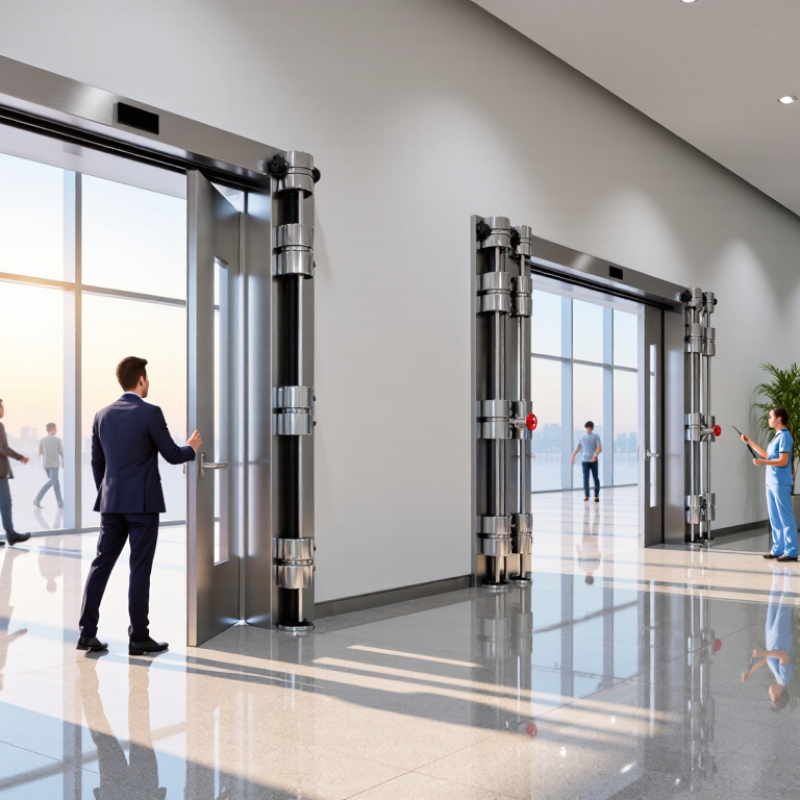
High-traffic commercial doors need more than a strong closer. They need controlled movement. Surface-mounted overhead closers suit many entrances because they are accessible and simple to service. Concealed closers offer cleaner lines, but installation accuracy becomes critical. Floor springs work well on heavy glass doors and busy retail entrances. They transfer load through the floor, so the substrate must be prepared carefully.
Look for adjustable closing force, latching speed, backcheck, and delayed action. Closing force controls the door’s resistance. Latching speed helps the door shut securely near the frame. Backcheck reduces damage from sudden opening. Delayed action can help people carrying carts or packages. Hold-open functions require careful selection, especially where fire safety rules apply. A qualified installer should confirm local requirements before changing any setting.
In field inspections, I adjust one valve at a time and test the door repeatedly. A stronger setting is not always better. It may cause slamming, user fatigue, or hinge stress. Heavy traffic also exposes weak screws, misaligned frames, and air pressure problems. Check those causes before blaming the closer. For doors in humid coastal areas, corrosion-resistant materials and protected adjustment valves provide practical value. Still, no closer lasts forever. Regular cleaning, fastener checks, and seasonal testing prevent small faults from becoming daily interruptions. My own mistake was once focusing on closing speed while ignoring a slightly twisted frame. The adjustment helped briefly, but the frame needed correction.
Before adjusting a heavy-traffic door closer, inspect the complete opening. Check the hinges, frame, screws, arm connection, and floor for damage. A closer cannot correct a sagging door. In field maintenance, loose fasteners often create more trouble than incorrect closing speed. Open the door halfway, then release it carefully. It should close smoothly without slamming or stopping. ANSI/BHMA A156.4 classifies door closers by performance and cycle durability, so busy entrances need suitable hardware, not only tighter adjustment.
Safety checks matter near fire-rated doors. NFPA 80 requires approved, self-closing fire doors to remain unobstructed and properly maintained. Never disconnect the closer or wedge the door open. For accessible interior doors, the 2010 ADA Standards specify a maximum opening force of 5 pounds, excluding fire doors. Measure the force with a calibrated gauge when possible. The result can change with wind, pressure, temperature, or floor friction. That detail is easy to miss.
Tips: Adjust one valve at a time. Use small quarter-turns. Test at least five cycles. Keep fingers away from the arm joint. Check the latch after every change. A slightly slower door may be safer than a violent close, but an overly slow door can compromise fire-door performance. Record the setting and inspection date. Recheck it after several busy days, because the first adjustment is rarely perfect.
China Top Door Closers: How to Adjust for Heavy Traffic?
How to Set Closing Speed and Latching Speed Correctly
In busy entrances, a door closer needs controlled movement, not maximum force. The closing-speed valve manages the main swing, usually from a wide opening to about 10 degrees. The latching-speed valve controls the final few inches. That last movement should pull the door firmly into the frame without slamming. Begin with the door fully closed. Turn each adjustment valve only one-eighth of a turn, then test the door several times. Many closers slow when turned clockwise, but valve directions can differ. Check the adjustment markings or service instructions.
Watch the door, not just the handle. A door that races through the main swing may strike people, walls, or nearby equipment. A door that crawls at the end may fail to latch during repeated use. In my experience, heavy traffic often tempts people to increase spring power too much. That can make the opening tiring and may shorten hardware life. Work slowly. I once reduced the closing speed too far and created a new problem: the door stopped just before latching. A small latching-speed increase corrected it. Check the door in different conditions, including windy periods and after several consecutive cycles. Keep the valves protected, and never remove them while the closer is pressurized. A final adjustment should balance reliable latching, safe movement, and comfortable opening.
Recommended closing-speed and latching-speed targets by door leaf mass
For high-traffic doors, adjust the main closing speed so the door moves smoothly from approximately 90° to 12° in at least 5 seconds. Set the latching speed separately so the final 12° closes firmly without slamming. Heavier doors generally require a slower, more controlled closing cycle. Always verify the final setting against local accessibility and fire-door requirements.
Heavy-traffic doors need controlled movement, not maximum resistance. The U.S. Access Board’s ADA Standards limit interior door opening force to 5 lbf, where applicable. Measure force with a door force gauge, not by hand. A comfortable setting may still fail during peak use.
Adjust backcheck to slow the door before it reaches the wall or a nearby glass panel. It should cushion the final opening range, never act as a substitute for a door stop.
Delayed action keeps the door open briefly for carts, wheelchairs, and groups. Set only enough delay for practical passage. Too much delay can disrupt fire and smoke-control requirements. Always verify the assembly against local codes and the approved hardware schedule.
Set opening force carefully. A stronger spring can resist wind and repeated traffic, but it may create access problems. ANSI/BHMA A156.4 classifies Grade 1 closers through 2 million test cycles, showing why durability matters in busy buildings.
Field adjustment still needs patience. A quarter-turn can change closing behavior noticeably. Test the door with a loaded cart, then repeat after temperature changes.
My first setting is rarely perfect. Heavy doors, uneven hinges, and air pressure often reveal mistakes later. Record each adjustment and inspect fasteners, arm alignment, latch engagement, and closing speed during routine maintenance.
In heavy-traffic buildings, a door closer needs more than a quick speed adjustment. Check the door, frame, hinges, and floor first. A closer cannot compensate for a sagging door or damaged hinge. I usually open the door halfway and release it. It should close steadily without slamming or stopping. Watch the latch engage fully.
Adjust closing speed in small steps. Turn the control slightly, then test the door several times. The final movement should be firm enough to latch, but not violent.
If the door drifts slowly, check for air pressure, seals, or friction. If it slams, reduce the speed and inspect the valve for damage. Never force an adjustment screw. It may cause an internal leak.
Maintenance should match traffic levels. In a busy entrance, inspect screws, arms, mounting plates, and pivots every few weeks. Tighten loose hardware carefully. Clean dust from moving joints, but use only suitable lubricant where the manufacturer permits it. I once adjusted a closer too aggressively, and the door became difficult for older visitors. That mistake showed me why user comfort matters as much as closing force. Keep a simple log of test dates, changes, and recurring faults. A closer that passes one test may still fail during rain, wind, or peak visitor hours.
Surface-mounted overhead closers are practical, accessible, and easier to service. Concealed closers provide cleaner lines but require precise installation.
Floor springs work well with heavy glass doors and busy retail entrances. Their load transfers through the floor, so the substrate needs careful preparation.
Adjustable closing force, latching speed, backcheck, and delayed action are useful. Delayed action helps people carrying carts or packages.
Excessive force may cause slamming, user fatigue, or hinge stress. Stronger is not always better.
Open the door halfway, then release it. It should close steadily and latch fully without stopping or slamming.Test it repeatedly.
Check the door, frame, hinges, seals, floor, and air pressure first. A closer cannot correct a sagging door or damaged hinge.
Turn the control slightly, then test the door several times. The final movement should latch firmly without striking the frame.Never force the screw.
Inspect screws, arms, mounting plates, and pivots every few weeks. Clean moving joints and use suitable lubricant only when permitted.
Humidity, wind, rain, and air pressure can change door movement. Coastal entrances benefit from corrosion-resistant materials and protected adjustment valves.
No. Hold-open functions may affect fire safety requirements. A qualified installer should confirm local rules before changing settings.
Choosing the right door closer for a busy commercial entrance starts with understanding its type, power range, durability, and adjustment functions. Before making changes, inspect the door, frame, hinges, fasteners, seals, and closer body for damage or unusual resistance. Confirm that the door swings freely and that all safety conditions are satisfied. The key question is: How to adjust a door closer for heavy traffic areas? Begin by setting the closing speed so the door moves smoothly without slamming, then fine-tune the latching speed to ensure reliable closure and secure engagement.
For demanding entrances, adjust the backcheck to control the door near its maximum opening angle, while delayed action can provide extra time for people carrying items or moving through the doorway. Opening force should remain practical for regular users and accessible passage. After every adjustment, test the door repeatedly under different conditions, checking for slamming, incomplete latching, excessive resistance, or leaks around adjustment valves. Regular cleaning, inspection, and small corrections help maintain safe, quiet, and dependable operation.

RZ door